Skip to product information
1 of 1

Lalesa

Lalesa

A black honey lot from Gedeb, shaped by high-altitude growing conditions and meticulous processing: stone fruits and caramel.

Regular price £18.75
Regular price Sale price £18.75
Sale Sold out
Volume

Character

We taste stone fruits and caramel.

Brewing

Recommended for espresso and filter.

Resting

We recommend resting our coffee inside its sealed bag for a minimum of 21 days to enjoy the best results.

View full details

Black Honey Process

This black honey lot comes from Lalesa in Gedeb, one of Ethiopia’s most respected coffee-producing regions. The coffee is grown at approximately 2,150 to 2,200 metres above sea level under natural shade trees and harvested between December and January, following the country’s seasonal cycle that supports flowering, fruit development and ripening.

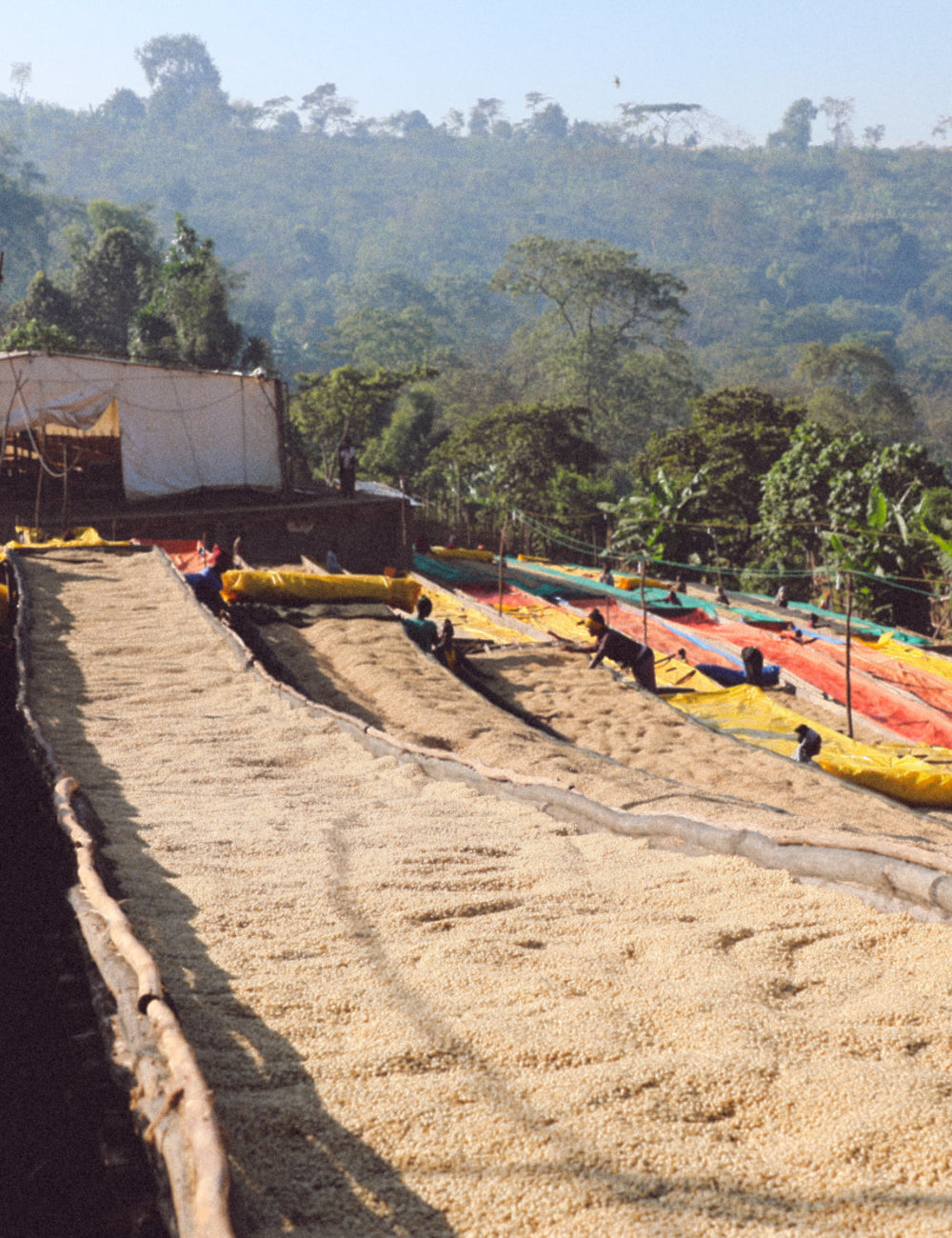
The lot is processed at an Ephtah-owned site established in 2023. As the largest drying site in Gedeb, Lalesa has around 400 drying beds and plays an important role in preparing coffees from the surrounding area for export.

The Producer

For this black honey process, ripe cherries are carefully selected, floated to remove lower-density fruit, rested briefly on drying beds, then pulped and dried under shade for around 25 days. The controlled drying and close attention during processing are designed to preserve quality and develop the character of the lot.

Once dried, the coffee is transported to Addis Ababa for export preparation before moving through Djibouti for shipment.

  • Production Data

    Produced by Local Smallholders
    Region - Gedeb
    Grown at 2150 - 2200 masl
    Varietal - 74110, 74112, Heirloom
    Harvest - January 2026
    Process - Black Honey

  • Black Honey

    Ripe cherries are pulped, removing the skin while leaving a high proportion of the sticky mucilage attached to the parchment. The coffee is then spread on raised beds or patios and dried slowly, with the mucilage remaining in contact with the parchment.

    The coffee is turned regularly to encourage even drying. Once the target moisture content is reached, the parchment is rested before being hulled and sorted in the dry mill.

1 of 2